
A volcano is a vent in the crust of the Earth, another planet or satellite, from which issue eruptions of molten rock, hot rock fragments and hot gases.
Volcanoes are the creators of eighty percent of the earth’s surface, as with each eruption the foundation for life on Earth was laid.
How are volcanoes formed?
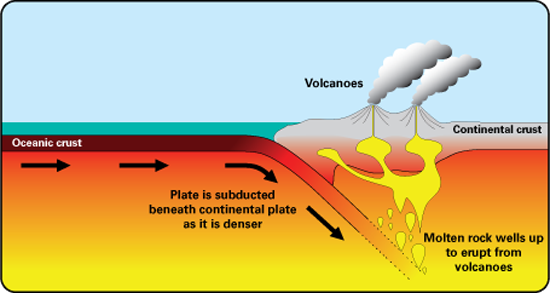
Most of the Earth’s volcanoes are formed along it’s tectonic plates; as they constantly shift and bump into each other. When these plates collide and one plunges deep below the other forming what is called the Subduction Zone, sinking deep into the Earth, this causes the temperature and pressure to rise, releasing water from the rocks, which reduces the melting point of the rock, forming magma (molten underground rock).
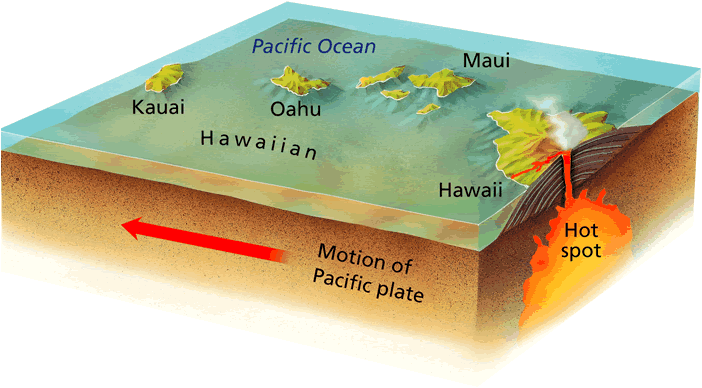
However, not all volcanoes are form through subduction, others are formed through hotspot volcanism. This is when a zone of magmatic activity or hotspot in the midst of a tectonic plate pushes up through the crust to form a volcano. Though the hotspot is thought to be largely stationary, the tectonic plates continue their slow movements, which oftentimes creates a line of volcanoes or islands on the surface. This mechanism is thought to be behind the Hawaii volcanic chain.
Volcanoes usually erupt in one of two ways; explosively or effusively.
Explosive eruptions happen when viscous molten rock traps the gasses, building pressure until it violently breaks free. Whilst, effusive eruptions occur when the magma is less viscous, or runny, which allows gas to escape and the magma to flow down the volcano’s slopes.
The Ring of Fire
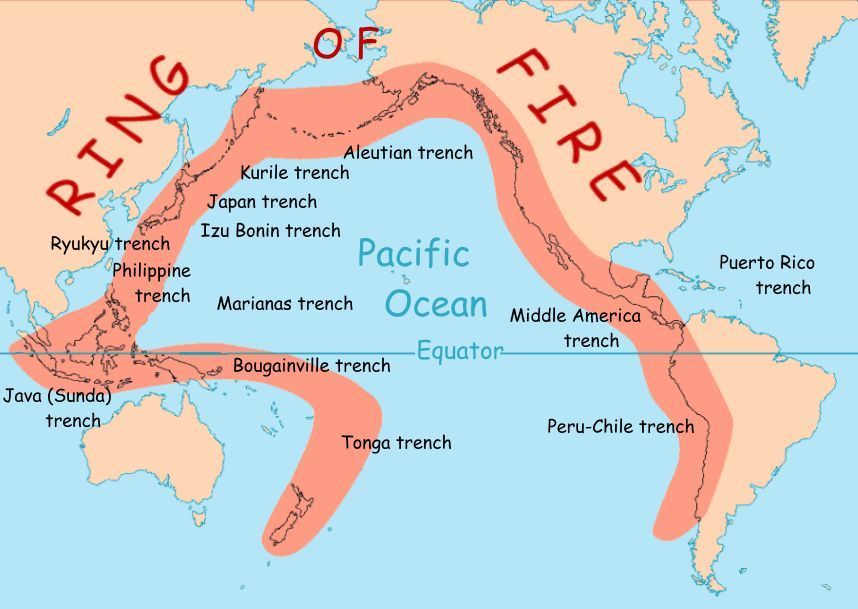
The ring of fire is a major area in the basin of the Pacific Ocean, containing a string of volcanoes, seismic activities and earthquakes. Approximately ninety percent of the Earth’s volcanic activity occur in this area.
It is shaped more like a horseshoe with a string of 452 volcanoes stretching from the southern tip of South America, up along the coast of North America, across the Bering Strait, down through Japan, and into New Zealand. The ring closes with the dormant and active volcanoes of Antarctica.
Most of the active volcanoes on The Ring of Fire are found on its western edge, from the Kamchatka Peninsula in Russia, through the islands of Japan and Southeast Asia, to New Zealand.

Mount Ruapehu in New Zealand is one of the more active volcanoes in the Ring of Fire, with yearly minor eruptions, and major eruptions occurring about every 50 years.
Active Volcanoes in the Caribbean
The Soufrière Hills – Monsterrat
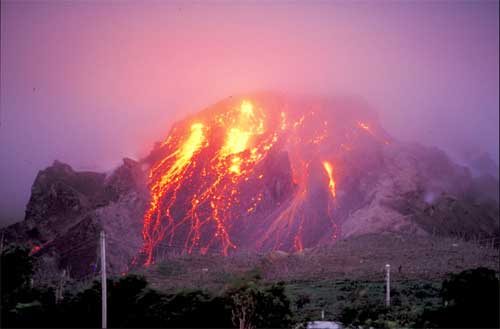
January 1997
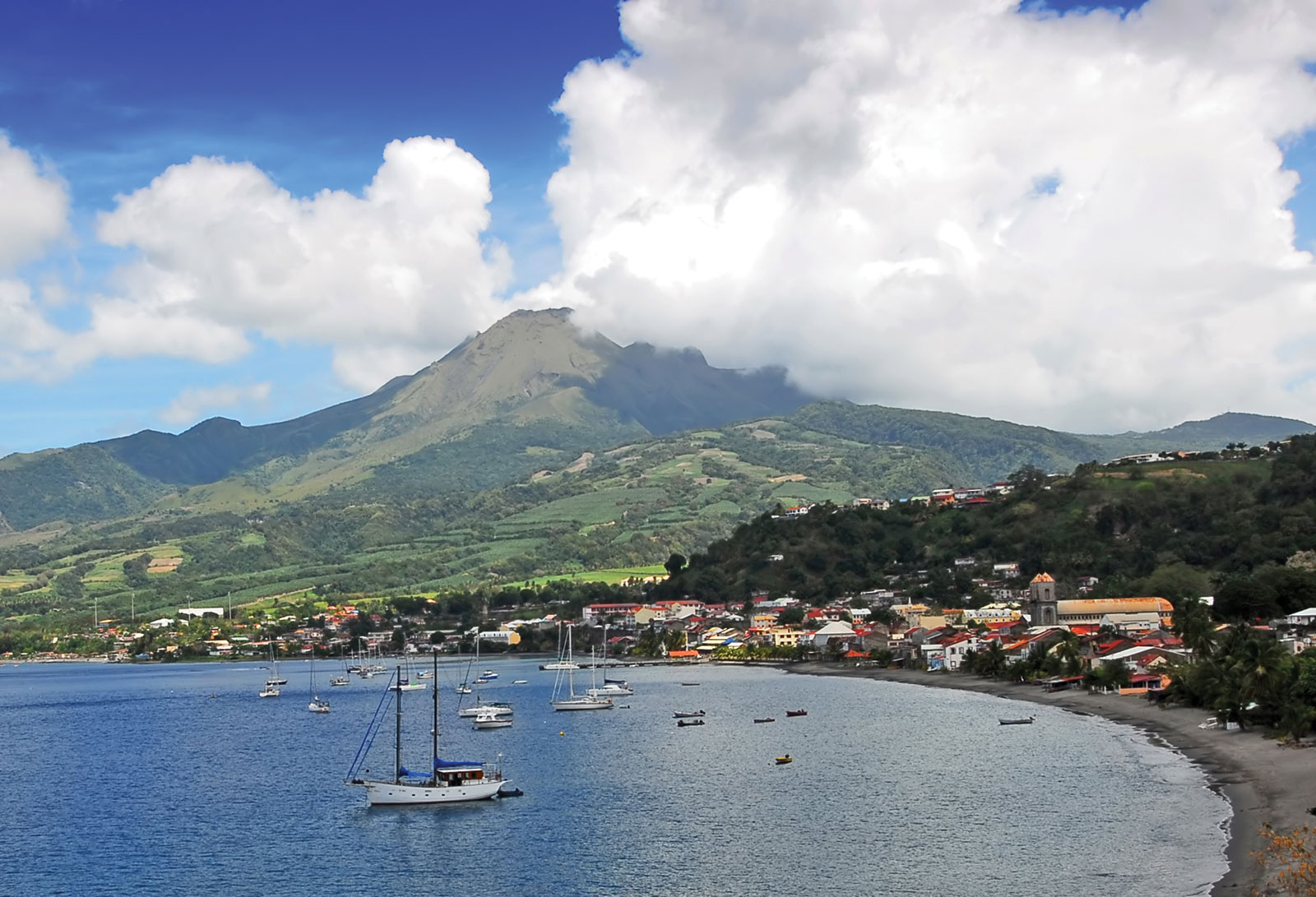
Mount Pelée -Martinique
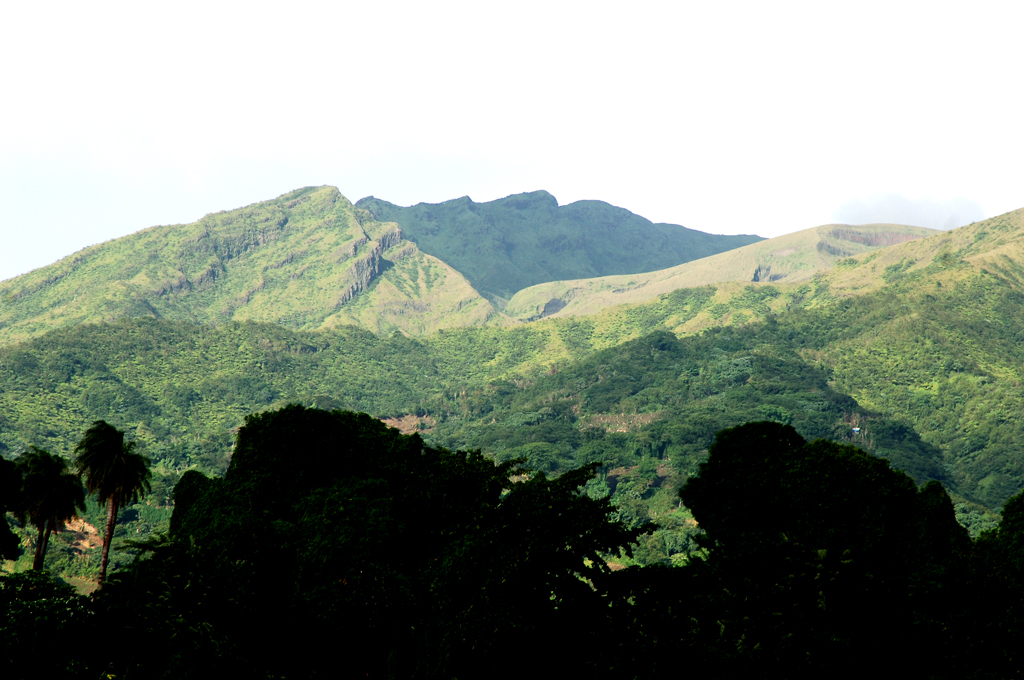
La Soufrière- St. Vincent
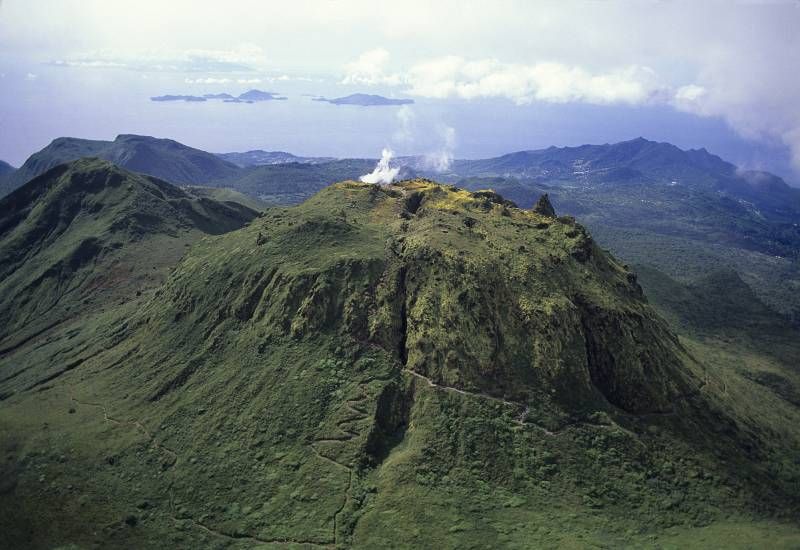
La Grande Soufrière – Guadeloupe
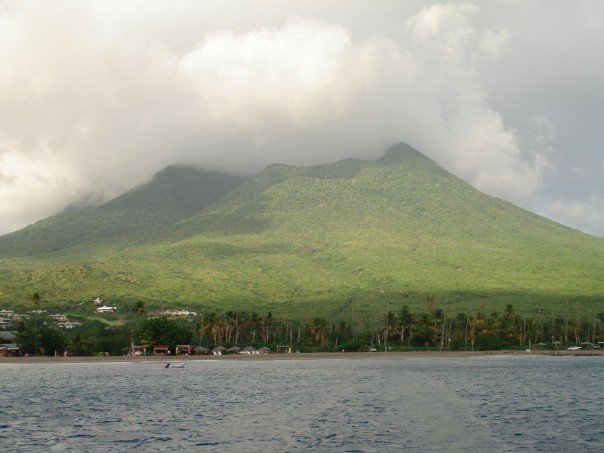
Although there have been no history of eruption since prehistory, the Nevis Peak located in the centre of the island of Nevis, is regarded as potentially active as there are active fumaroles and hot springs on the coastal slopes of the island, and these represent low-level volcanic activity.
Do hope you found this talk informative, please share what you know about volcanoes. I would love to know of any close encounters, such as visiting any volcano natural parks or witnessing of an eruption. Do share your own thoughts and experiences.
Until next time the talk….continues!
References;
https://en.wikipedia.org/wiki/Ring_of_Fire
https://www.nationalgeographic.com/science/earth/reference/hawaii-volcanoes-explained/
https://www.dosomething.org/us/facts/11-facts-about-volcanoes
https://www.britannica.com/place/Mount-Pelee
https://www.britannica.com/place/Mount-Pelee/media/449146/147017
 Just Talk with Lady Ann